
Simpson County Criminal Court Cases
Kentucky divides Simpson County criminal court cases by the level and stage of the matter. District Court hears misdemeanors, violations, traffic cases, city and county ordinance cases, arraignments, and felony probable-cause proceedings. After indictment, a felony moves into Circuit Court in Kentucky's 49th Judicial Circuit. Circuit Court also handles felony pleas and sentences, trials, and appeals from District Court.
The Simpson Circuit Court Clerk maintains both District and Circuit case files. Franklin has no separate municipal court database, so a city ordinance or traffic matter goes through Simpson District Court. The official Simpson County roster helps distinguish local officeholders, but the elected Simpson County Clerk handles other county records and does not hold criminal court files.
Simpson County Cases From District to Circuit
A felony case usually has two local court phases. District Court conducts the initial appearance, addresses bond, and handles preliminary felony work. An indictment sends the prosecution to Circuit Court, where a new set of docket events can include arraignment on the indictment, motions, discovery, a plea or trial, judgment, and sentence. A misdemeanor may remain in District Court from arraignment through disposition.
This court split explains why one name can appear beside different case numbers or divisions. It also explains why the charge shown in a jail entry may not match the charge that survives in court. For a sound reading, compare the court, case number, filing date, charge text, and final disposition rather than treating the first matching name as conclusive.
Searching Simpson County Case Records
Guest CourtNet and the Kentucky eCourt applications provide the public starting point for Simpson County case records. Guest access is not the same as the credentialed CourtNet 2.0 product used by authorized subscribers. The local clerk remains the source for the authoritative file, copies, and questions about an entry.
- Open the Kentucky court applications page and choose the available public case-search route.
- Search by party name or enter a known case number, then select Simpson County.
- Narrow a broad result with the available court division, case type, or date controls.
- Open the likely docket and compare its case number, charge, event dates, and disposition.
- Contact the Simpson Circuit Court Clerk for filed documents, certified copies, recordings, or archived material.
| Field Label | Type | Required | How to Use It |
|---|---|---|---|
| Last, First, Middle | Text | Search dependent | Use the most complete known spelling and validate the result with other fields. |
| Case Number | Text | No | The strongest route when the full Simpson County case number is known. |
| County | Select | For local filtering | Select Simpson to avoid similarly named parties in other Kentucky counties. |
| Division or Case Type | Select | No | Distinguishes District and Circuit matters and narrows the result set. |
| Date or Filing Year | Date/select | No | Helps separate repeated names and cases filed in different years. |
Simpson County Criminal Files at the Clerk
The official Simpson County court page places the public counter at the Simpson County Justice Center, 101 N. Court St., Franklin, Kentucky 42134. Circuit Court Clerk Beth Anne Fiss's office can be reached at 270-586-4241 or 270-586-8910. Published hours are Monday through Friday, 8 a.m. to 4 p.m. A case number is the best reference to bring when asking to inspect or copy a criminal file.
The official Kentucky court-record request instructions explain that a local clerk is the route for a specific court file. The successful source capture below shows that official request channel rather than a private case aggregator.
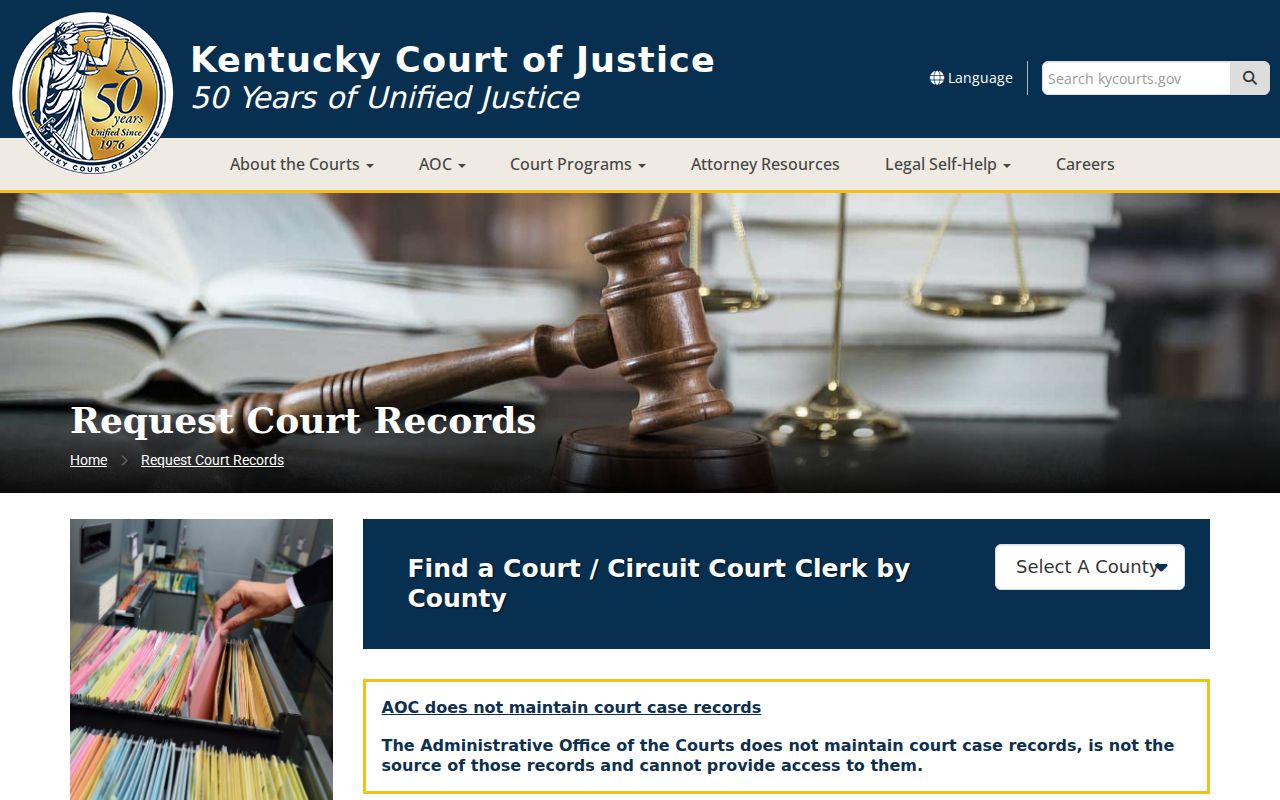
That distinction keeps the request with the office that can confirm whether a document is public, available online, or held only in the local file.
Inside a Simpson County Case File
A Simpson County criminal case file records court procedure, not just an arrest. Kentucky Courts identifies materials such as citations, pleadings, motions, orders, evidence, reports, docket sheets, video recordings, and transcripts. The precise contents depend on what was filed and retained in that case.
| Case Number & Court | Identifies the county, division, and matter so a reader can separate District and Circuit proceedings. |
|---|---|
| Charging Document | May be a citation, complaint, or indictment and shows the accusation formally presented to the court. |
| Docket Entries | Chronological entries note filings, hearings, orders, continuances, and other procedural events. |
| Hearing Dates | Scheduled and completed events help trace the case through arraignment, pretrial work, and disposition. |
| Disposition & Judgment | Shows whether a charge was dismissed, amended, acquitted, resolved by plea, or ended in conviction. |
| Sentence & Conditions | May state custody, supervision, financial obligations, or other terms imposed in the judgment. |
Reading Simpson County Case Dispositions
The disposition answers a different question than the charge. “Dismissed” means that charge ended without a conviction, but the historical docket does not vanish automatically. “Acquitted” reflects a not-guilty result. “Amended” signals that the filed or final charge differs from an earlier version, while “pending” says only that no final outcome has been recorded.
A “no bill” means the grand jury did not indict on the presented felony charge. A guilty finding or plea leads to a judgment, and the sentence should be read from that final court record. This is why the Simpson County arrest lookup and the criminal case file serve separate purposes: one documents custody and the initial allegation, while the other tracks the prosecution and outcome.
How a Criminal Case Moves
Simpson County criminal court cases do not all follow an identical timetable, and the research does not support a promised number of days for any stage. Misdemeanors can stay in District Court. A felony can begin there, move through grand-jury review, and continue in Circuit Court. Pretrial Services may supply risk information, but the judge decides release conditions.
Case flow: Charges Filed › Arraignment › Pretrial › Plea or Trial › Disposition › Sentencing
Post-judgment motions or an appeal can add later entries. When the online docket seems to stop early, the clerk can confirm whether the event has not yet been entered, belongs under another case number, or is available only in the file.
Simpson County Diversion and Drug Court Paths
The 49th Circuit publishes a local Class D felony pretrial-diversion protocol. Its rules include offense and criminal-history limits, statutory exclusions, a guilty or Alford plea, and an application deadline at least seven days before trial. Diversion may last up to five years. These are eligibility rules, not a promise that every Class D charge qualifies.
Kentucky Drug Court is a separate Court of Justice treatment and accountability program. A statewide program description does not establish that a particular person or Simpson County case has been admitted. The clerk or local program staff should confirm whether a Simpson track is operating and which court entries document participation.
The Kentucky legal-forms collection is the official place to identify current court forms. Its successful capture provides useful visual context for finding the right form by subject and number.
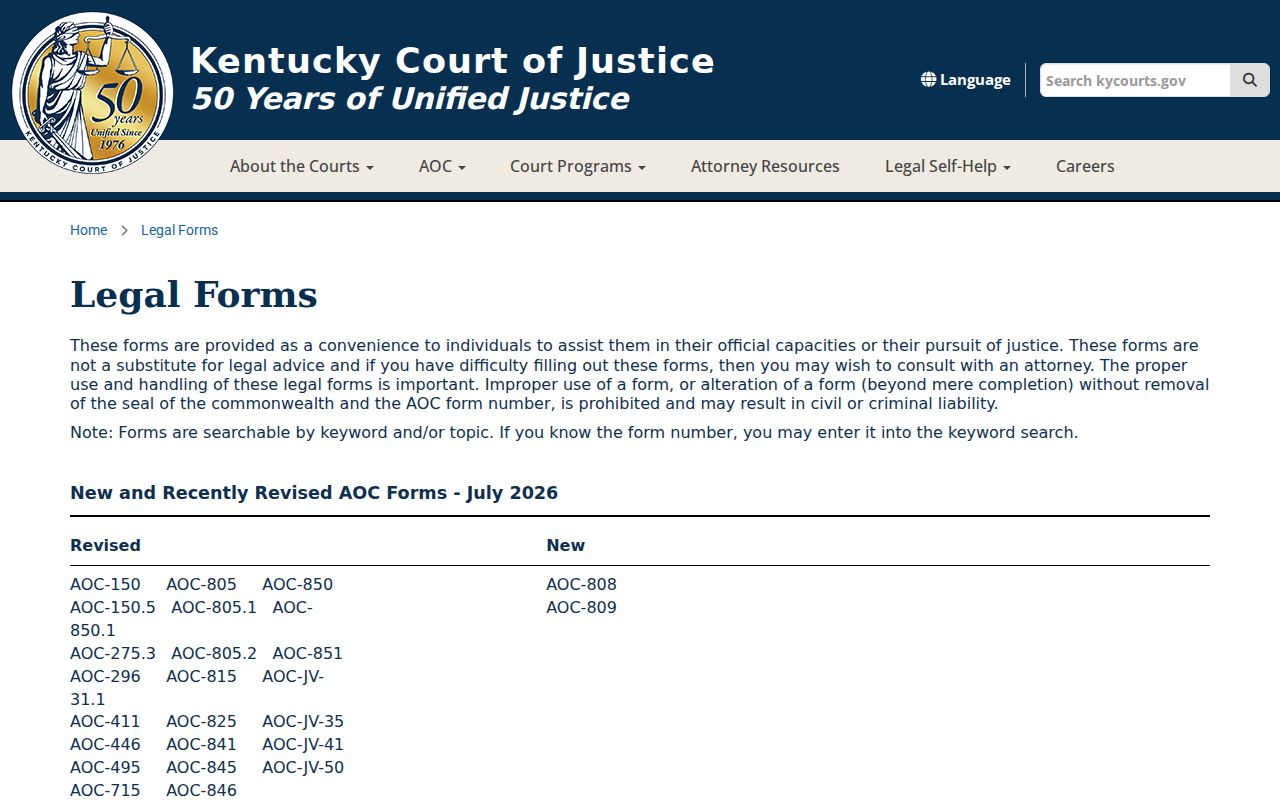
Forms do not replace the docket or the clerk's filing instructions, so the case number and local procedural requirements still need confirmation.
Older Simpson County Criminal Case Files
An older Simpson County criminal file may be stored away from the Justice Center. The local clerk first identifies the case number, storage facility, and file locator numbers. Those locator details can then be sent to state.records@ky.gov, or a reader can call the State Records Center at 502-564-3617.
The State Records Center cannot search by a person's name or Social Security number. Starting there without the locator data will not solve a missing online result. The practical fallback is CourtNet, then the Simpson Circuit Court Clerk, then the archive named by the clerk. Current plain-copy, certified-copy, recording, and transcript fees should also be confirmed with the clerk because the Simpson court page does not publish a fee schedule.
Federal Cases Outside Simpson County CourtNet
A federal prosecution is not a Simpson District or Circuit case. The U.S. District Court for the Western District of Kentucky is the relevant federal trial-court layer, and federal dockets are accessed through PACER. A search of Simpson County CourtNet will not substitute for that federal docket.
The successful PACER capture below represents the federal access channel. It belongs in this separate layer because mixing federal and Kentucky case numbers can lead a reader to the wrong clerk.
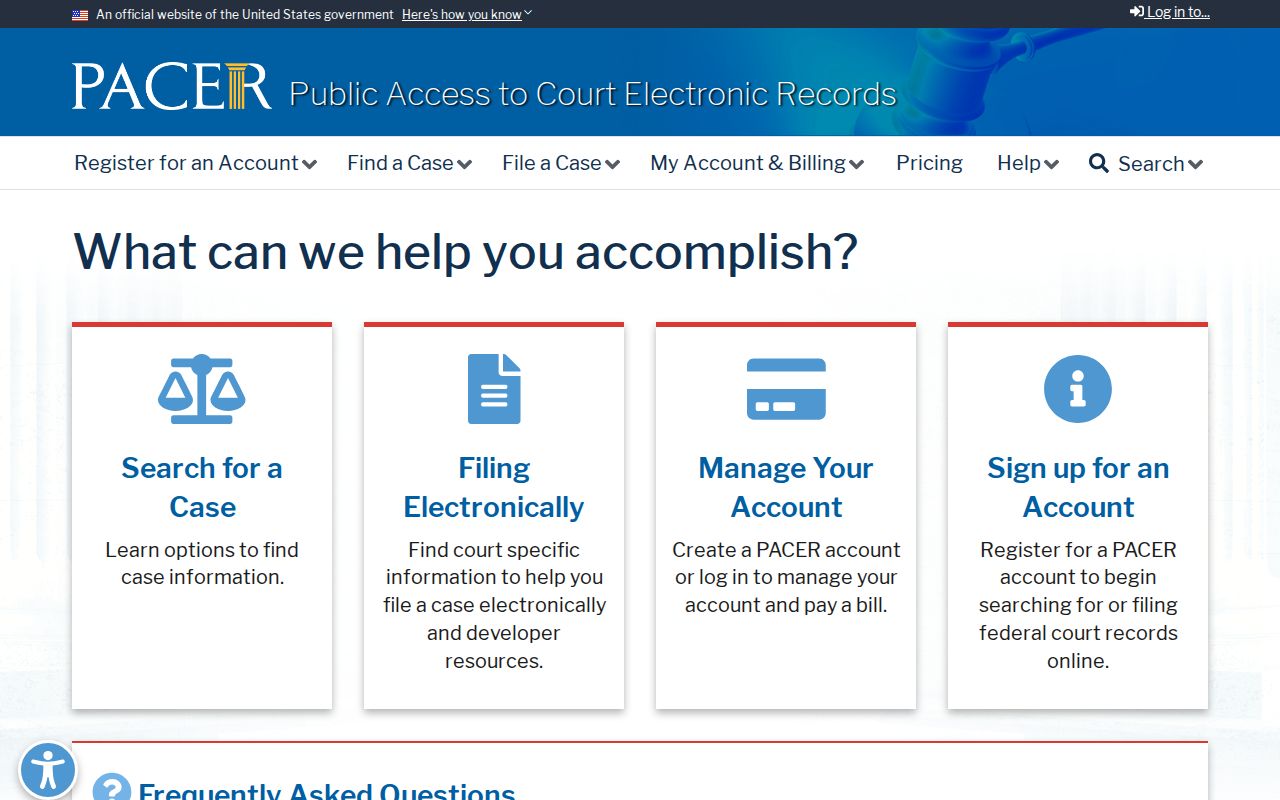
Federal custody information, state criminal history, and county court filings are also distinct systems. A PACER docket should be verified through the federal court just as a Simpson file should be verified through its local clerk.
Case Record Access & Restrictions
Public access to Simpson County case records does not expose every field or document. Birth dates, Social Security numbers, protected victim and minor identifiers, and sealed material are not public profile fields. Juvenile records, expunged matters, and other confidential records require legal authority beyond an ordinary public request.
Kentucky's court-file route is also distinct from the Kentucky Open Records Act process used for executive-branch agencies. A request for a specific District or Circuit case goes to the Simpson Circuit Court Clerk, not to an AOC administrative-record channel. If a public document contains protected details, the office may redact those details while releasing the separable portion.
Note: A missing online result may reflect spelling, timing, access limits, or archiving, so ask the clerk before assuming no case exists.